Kendaks R&D guide

Multi-Region High Availability BPO Platform

Category: Industry Solutions

Scenario: A BPO platform must maintain 99.9%+ availability for agent tooling, CRM integrations, and call routing. Example: 'Kendaks BPO Platform' runs active-active across two regions.

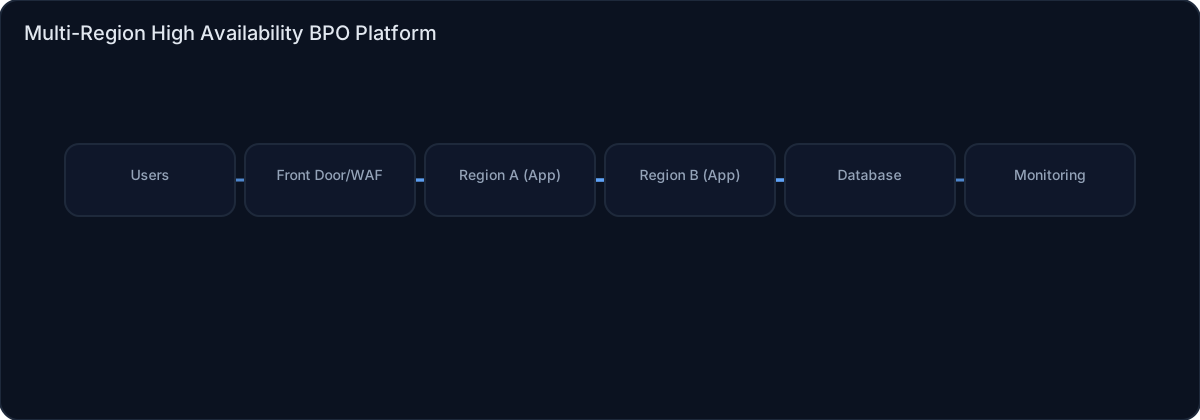
Architecture diagram

High-level view of the main components and data/control flows.

Architecture diagram

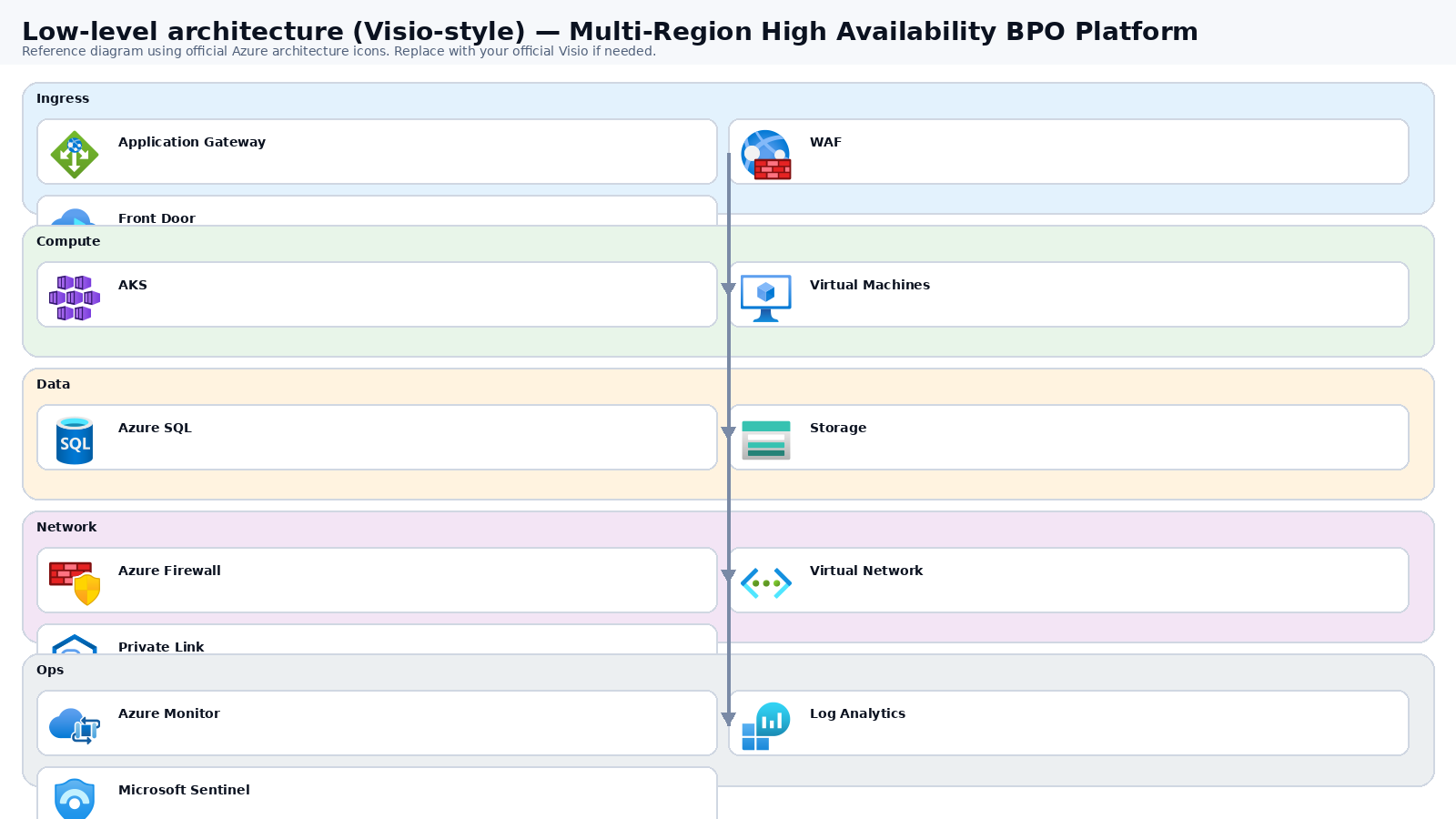
Low-level architecture diagram (Visio-style)

Implementation view (networking, security, ops). Click to open full size.

Low-level architecture diagram

Low-level architecture details

(No low-level text provided.)

Step-by-step implementation

Step 1/6
Plan

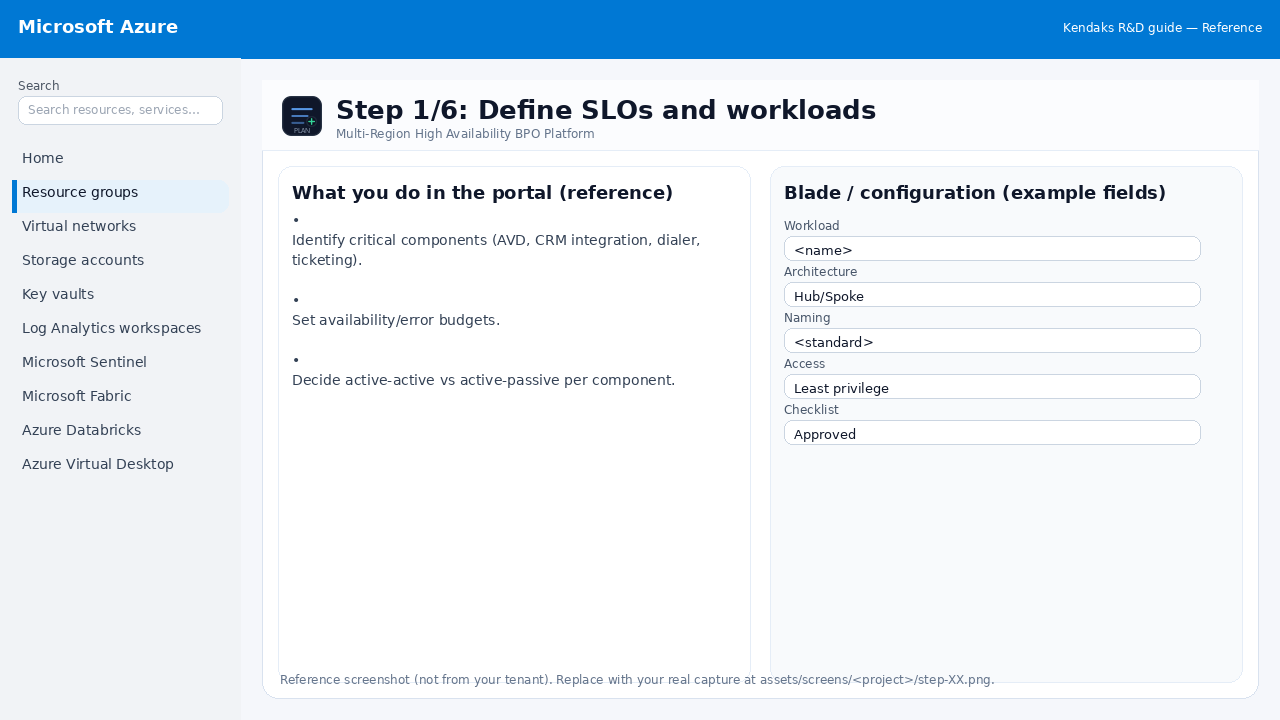
Define SLOs and workloads

Reference screenshot for Multi-Region High Availability BPO Platform step 1
Reference portal screenshot (click to zoom). Replace with your tenant capture if needed.
  • Identify critical components (AVD, CRM integration, dialer, ticketing).
  • Set availability/error budgets.
  • Decide active-active vs active-passive per component.
Validation checklist
  • Stakeholders have signed off the scope, SLAs, and data/security requirements.
  • You have documented naming standards, environments, and ownership (RACI).
Zoomed screenshot
Step 2/6
Network

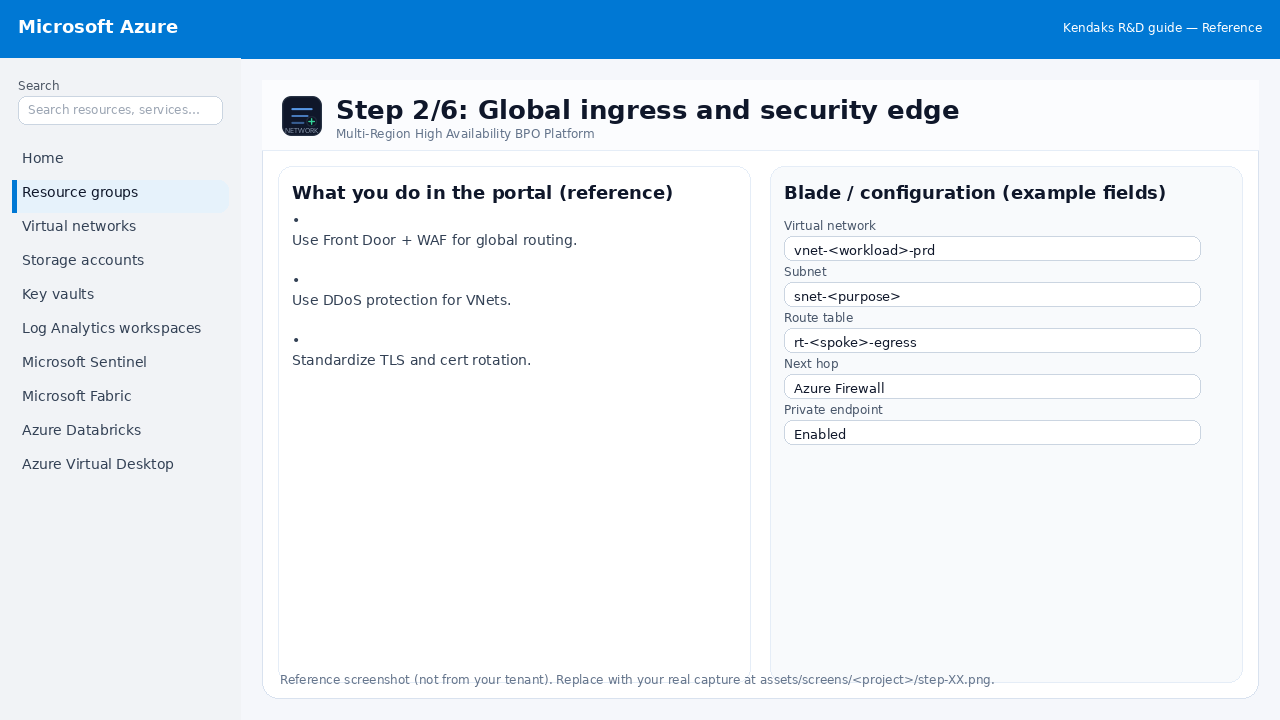
Global ingress and security edge

Reference screenshot for Multi-Region High Availability BPO Platform step 2
Reference portal screenshot (click to zoom). Replace with your tenant capture if needed.
  • Use Front Door + WAF for global routing.
  • Use DDoS protection for VNets.
  • Standardize TLS and cert rotation.
Validation checklist
  • The target VNet/subnets/peerings/UDRs/NSGs are deployed with no errors.
  • Connectivity test passes (e.g., Network Watcher connection troubleshoot / ping between subnets where allowed).
  • Egress is controlled (traffic observed in Firewall logs if applicable).
Zoomed screenshot
Step 3/6
Deploy

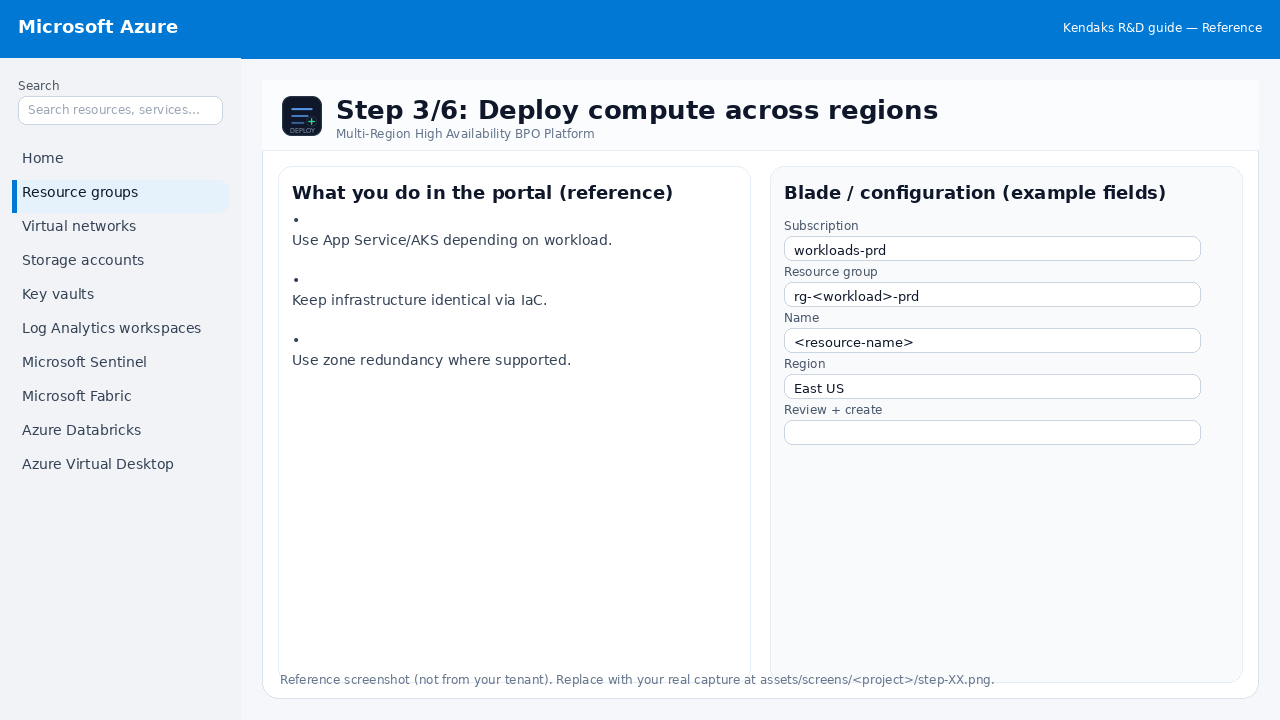
Deploy compute across regions

Reference screenshot for Multi-Region High Availability BPO Platform step 3
Reference portal screenshot (click to zoom). Replace with your tenant capture if needed.
  • Use App Service/AKS depending on workload.
  • Keep infrastructure identical via IaC.
  • Use zone redundancy where supported.
Validation checklist
  • Deployment completed; smoke tests passed; rollback plan confirmed.
Zoomed screenshot
Step 4/6
DR

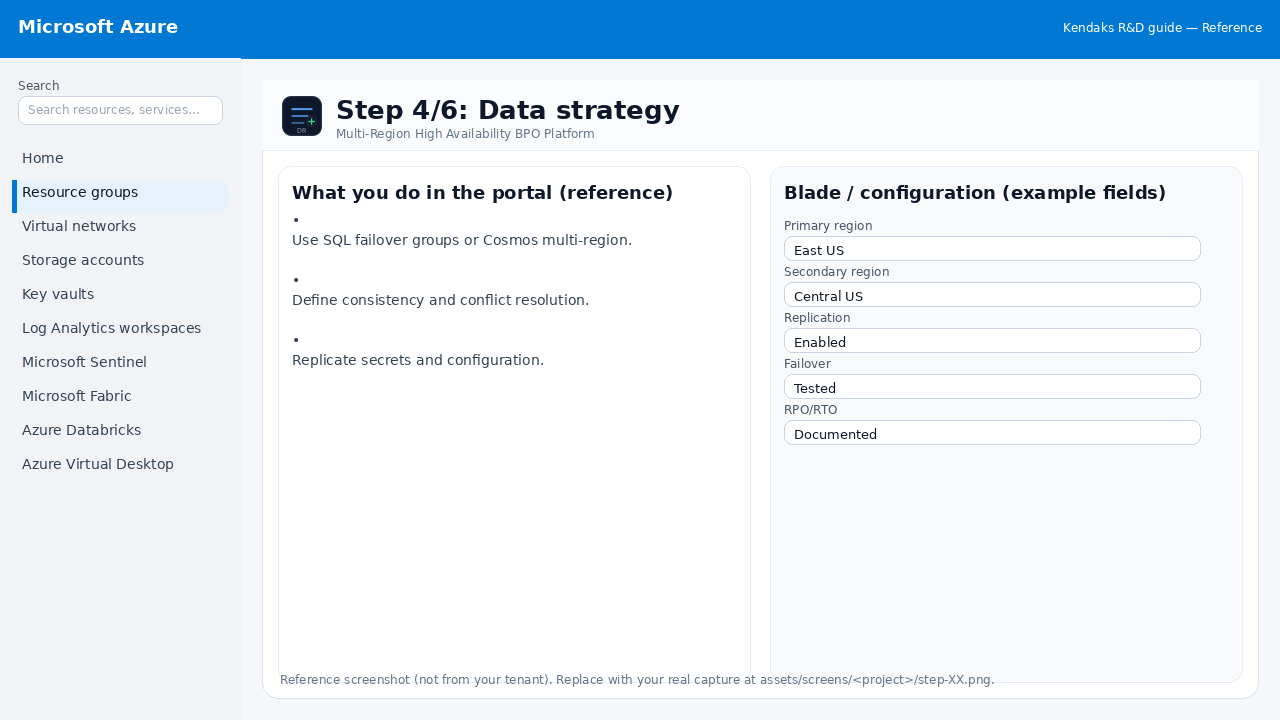
Data strategy

Reference screenshot for Multi-Region High Availability BPO Platform step 4
Reference portal screenshot (click to zoom). Replace with your tenant capture if needed.
  • Use SQL failover groups or Cosmos multi-region.
  • Define consistency and conflict resolution.
  • Replicate secrets and configuration.
Validation checklist
  • Failover procedure is documented and tested (tabletop + technical drill).
  • RPO/RTO measured and meets requirements.
Zoomed screenshot
Step 5/6
Monitor

Operations and incident response

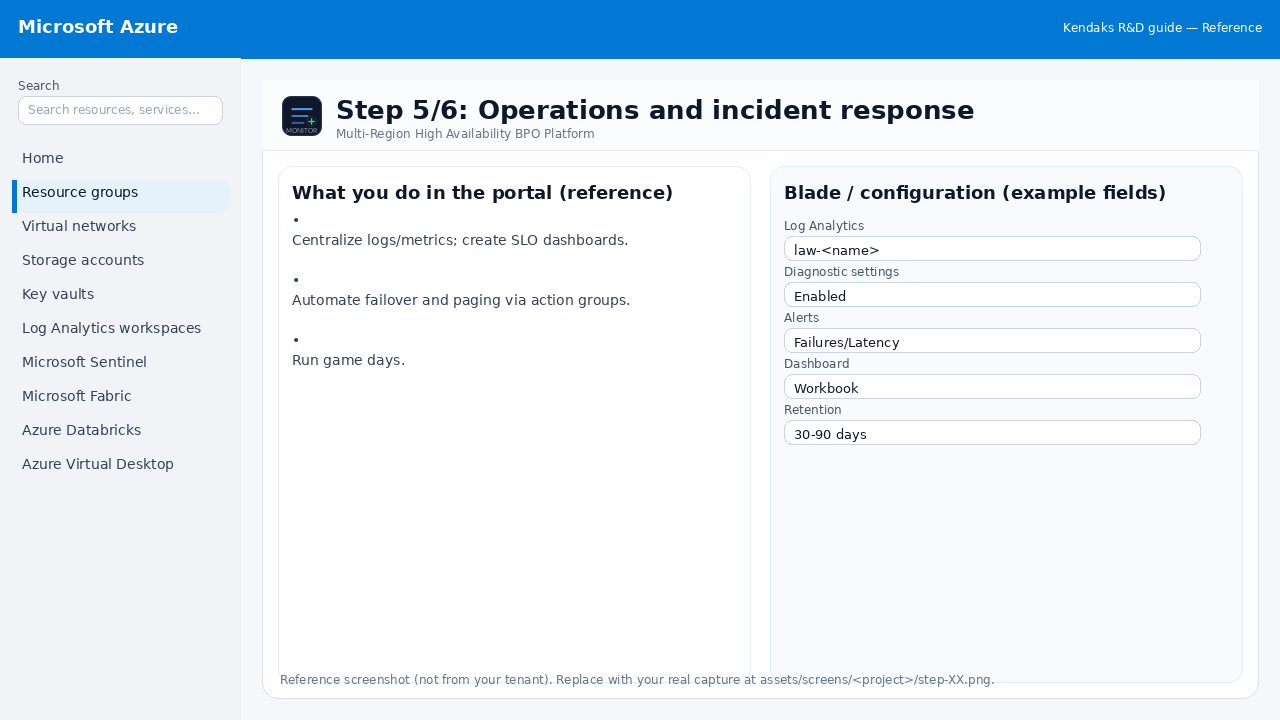
Reference screenshot for Multi-Region High Availability BPO Platform step 5
Reference portal screenshot (click to zoom). Replace with your tenant capture if needed.
  • Centralize logs/metrics; create SLO dashboards.
  • Automate failover and paging via action groups.
  • Run game days.
Validation checklist
  • Logs and metrics are flowing (check Log Analytics / Monitor).
  • Alerts trigger correctly (test alert path to email/Teams/ITSM).
Zoomed screenshot
Step 6/6
Test

Continuity tests

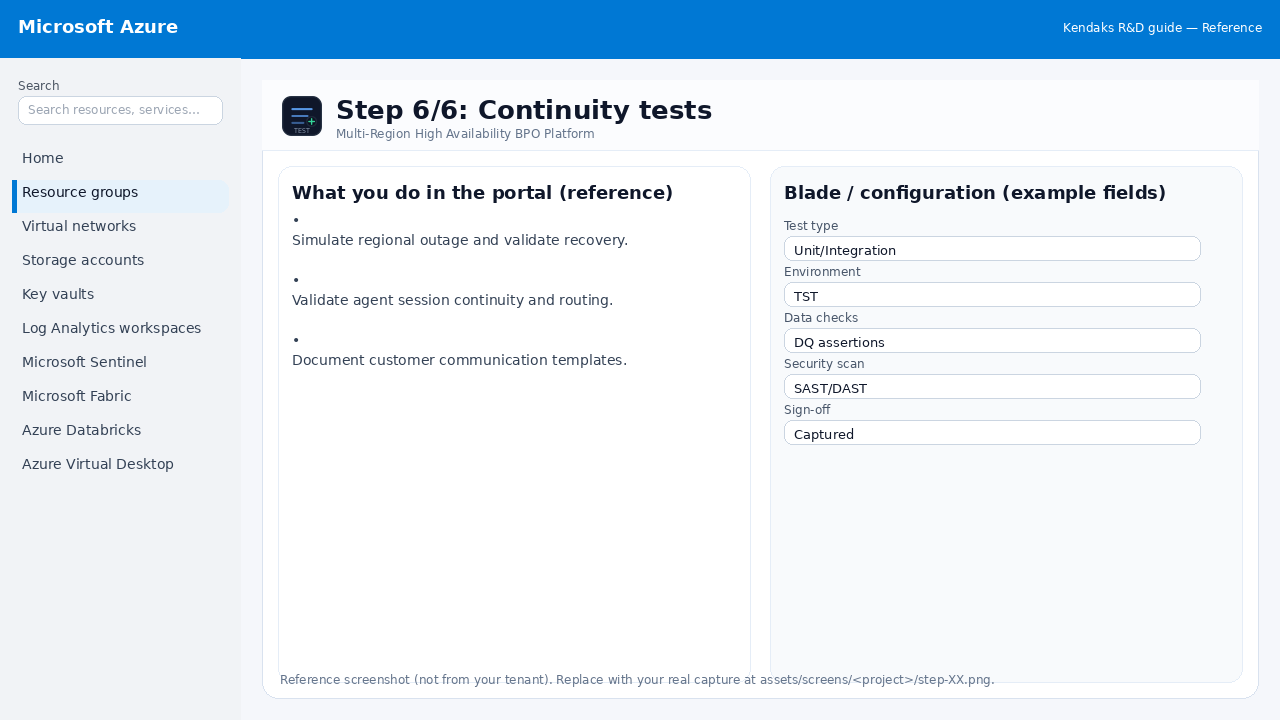
Reference screenshot for Multi-Region High Availability BPO Platform step 6
Reference portal screenshot (click to zoom). Replace with your tenant capture if needed.
  • Simulate regional outage and validate recovery.
  • Validate agent session continuity and routing.
  • Document customer communication templates.
Validation checklist
  • UAT completed with representative users and scenarios.
  • Performance meets baseline; issues tracked and remediated.
Zoomed screenshot

Video tutorials

References